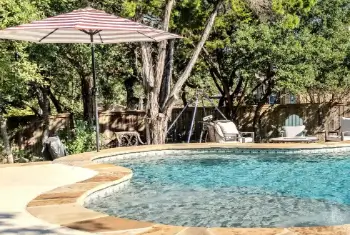


Texas weather can change quickly. Strong thunderstorms, heavy rain, high winds, hail, and lightning can all arrive with little warning. This leaves pools vulnerable to an accumulation of debris, equipment damage, and water quality issues. In this guide, we will explain how to prepare your pool for storms in Texas. This includes what to do during severe weather and the recovery steps that can help protect your investment. Need pool help across Hill Country? Cooper Custom Pools serves New Braunfels, San Antonio, and Boerne with pool maintenance and repairs.

Why Texas Storms Are Especially Hard on Pools
Texas storms tend to deliver large amounts of rain in a short period of time. That sudden influx of water can dilute pool chemicals, raise water levels, and introduce contaminants that affect water quality.
Wind creates challenges by blowing leaves, branches, and other debris into your pool. Lightning can damage electrical equipment, while hail can damage exposed surfaces. Power outages will interrupt pump operation, which can reduce circulation and filtration. Flooding around pool equipment is a problem because standing water can damage pumps and electrical parts.
Pool Storm Prep Checklist (Before the Storm)
A little preparation before severe weather arrives can make cleanup easier and protect your pool. Use this pool storm checklist whenever storms are in the forecast.
Lower the Water Level 6 to 12 Inches
Pool care during heavy rain is important as water levels rise and cause overflow issues. Lowering the water level beforehand provides room for excess rainfall and helps prevent water from spilling onto the deck.
Balance Chemistry in Advance
Storms can wash in contaminants and weaken your pool’s chemicals, which can lead to bacterial growth. Testing and balancing the water before severe weather arrives gives you a stronger starting point for recovery after the storm.
Secure Pool Furniture and Accessories
Umbrellas, chairs, and other pool-related items can become airborne because of strong winds. Make sure these items are secure before a storm begins to prevent damage.
Turn Off Power to Equipment
If severe weather is approaching, turn off the power to the pool equipment. This will help reduce electrical damage from lightning and power surges.
Cover the Skimmer if Possible
A skimmer cover may help limit the number of debris entering the filtration system. Less debris in the system often means less cleanup afterward.
Move Garden Furniture Away From the Pool
Outdoor furniture can shift or topple during high winds. Moving these items away from the pool reduces damage to the deck, tile, and water features.
Don’t Cover the Pool
While covering your pool can keep debris out, heavy rain and strong winds can place significant strain on a pool cover. In many situations, leaving the pool uncovered is the better option.
Document the Pool for Insurance
Take photos of the pool equipment, decking, and surrounding landscape before the storm arrives. If damage occurs, having documentation will help to support an insurance claim.
During the Storm
Once severe weather begins, stay indoors and avoid your pool area. Do not attempt to skim debris or enter the water while lightning is present. Lightning can travel through pool water and nearby surfaces, creating a serious safety hazard. The safest approach is to wait until the storm has completely passed before inspecting any part of your pool system.
After the Storm: Recovery Steps
Once conditions are safe, you should begin the recovery process. Proper pool maintenance after a storm can restore your water quality and prevent further equipment issues.
Inspect Equipment Before Powering On
Before restarting pumps or automation systems, inspect your pool equipment and the general vicinity. You are looking for standing water, loose wiring, visible cracks, or other signs of damage. If you suspect electrical issues, avoid turning on your pool equipment and call a professional for assistance.
Remove Large Debris by Hand
Remove branches and other large debris before you begin operating the filtration system. This helps prevent clogs and reduces stress on equipment.
Brush and Vacuum Once Water Clears
Storm runoff leaves debris on most pool surfaces. Brushing and vacuuming will help remove anything that settles to the bottom.
Test Chemistry
Heavy rainfall tends to change chemical levels. Test chlorine, pH, and alkalinity before you make any water adjustments.
Shock the Pool if Cloudy
Cloudy water usually means that there is contamination from storm debris and runoff. Shocking the pool will restore clarity and improve sanitation.
Check the Salt Cell
Saltwater pools may need additional attention after a storm. Verify that the salt cell is functioning properly and inspect for any error messages.
Run Equipment Continuously Until Stable
Once everything appears operational, run the circulation system. Do this until your water clarity and chemistry stabilize. If cleanup is overwhelming you and your water quality is still poor, a professional pool cleaning service can help.
Equipment Damage Warning Signs
Not all storm damage is obvious. Some issues won’t appear until you restart the system. Watch for equipment problems like pumps that won’t prime, salt cell errors, heaters that won’t start, odd pressure readings, cracked filter housings, or leaks around connections.
If you notice these warning signs, professional pool equipment service can help identify the source of the problem. In some cases, storm-related issues may require more extensive pool repair to restore normal operation.
When to Call Cooper Custom Pools
Some storm recovery tasks are straightforward, while professional help is necessary for others. If your pool equipment appears damaged, the pool is cloudy with treatment, or structural damage is visible, call us for help.
Whether you’re dealing with a New Braunfels pool storm cleanup or ongoing post-storm concerns, [company_name] provides professional support throughout the region. You can rely on pool service in New Braunfels, pool service in San Antonio, and pool service in Boerne.
How to Reduce Storm Risk Year-Round
While you can’t always avoid weather-related pool challenges, being proactive will help you minimize the impact of storms. To prepare, you can trim nearby trees and maintain proper drainage around the pool deck. Inspect equipment regularly to keep minor problems from becoming major repairs.
Routine pool maintenance in Hill Country can help identify developing issues before storm season arrives. You can also use renovation projects as an opportunity to explore custom pool construction upgrades that improve drainage and long-term performance. For larger repair or improvement projects, available pool financing options may help make those investments more manageable.
Texas weather can be unpredictable, but preparation can help minimize damage and simplify recovery. Following a good storm prep plan in Texas Hill Country and acting quickly after severe weather helps protect your pool and equipment all year. If you need assistance with pool maintenance after a storm, schedule an inspection.
Contact Cooper Custom Pools for an appointment in Boerne, New Braunfels, and beyond.